A good budget distortion pedal is defined by usable gain, not the biggest claims on its box. If the tone turns harsh, muddy, or noisy as you raise the drive, a low price quickly feels expensive.
This Best Budget Distortion Pedals roundup compares voicing, controls, and practical board fit across classic crunch, high-gain metal, and multi-effects options. Keep reading to find the right kind of grit for your rig.
Key Takeaways
- Prioritize a pedal with independent tone control so you can match its sound to your guitar, amp, and other effects.
- Choose low-, medium-, or high-gain voicing based on the styles you play most often, rather than relying on maximum distortion.
- Check the pedal’s power requirements and current draw before adding it to an existing board.
- Look for true bypass if you want the pedal removed from your signal path when switched off.
- Favor a compact enclosure for crowded boards, but make sure its knobs and footswitch remain easy to operate.
| RAT Voice Library |  |
JHS PackRat Multi-Mode Distortion | Nine RAT-inspired voices | Wide gain range | Familiar control layout | View on Amazon | Read Review |
| Classic Rock Staple |  |
BOSS DS-1 Classic Distortion | Recognizable rock distortion | Simple three-knob layout | Durable BOSS housing | View on Amazon | Read Review |
| Compact Metal Specialist |  |
Donner Morpher Three-Mode Distortion | Three useful gain modes | Tight metal voicing | Space-saving mini enclosure | View on Amazon | Read Review |
| Boosted Metal Drive | 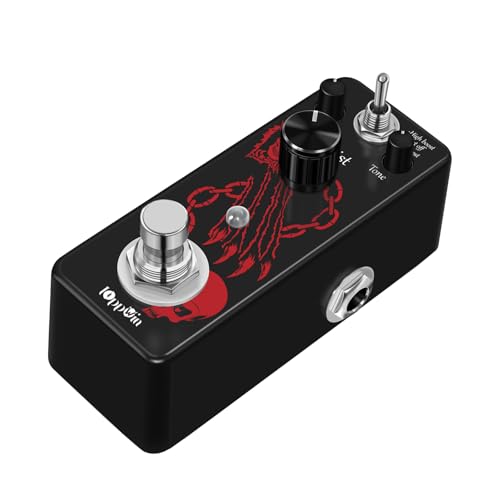 |
IOppWin Holy War Metal Distortion | Aggressive heavy-metal voice | Three selectable modes | Small pedalboard footprint | View on Amazon | Read Review |
| Flexible Fuzz-Edge Drive | 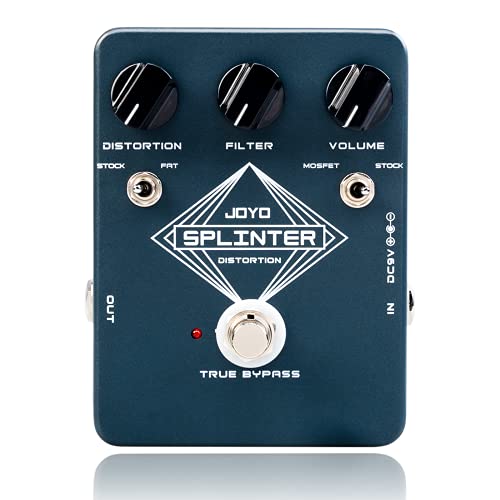 |
JOYO Splinter Analog Distortion | FAT and MOSFET voices | Analog distortion circuit | Useful tonal range | View on Amazon | Read Review |
| Practice Rig Workhorse |  |
MOOER GE100 Multi-Effects 80 Presets | 80 programmable presets | 66 built-in effects | Long phrase looper | View on Amazon | Read Review |
| Cult Gain Classic |  |
Pro Co RAT2 Distortion Pedal | Distortion-to-fuzz range | Strong midrange presence | Simple control layout | View on Amazon | Read Review |
| Full-EQ Heavy Drive |  |
JOYO JF-04 High-Gain Distortion | Full-range tone shaping | Classic rock to metal | Analog circuit design | View on Amazon | Read Review |
| Blues Breakup Pick |  |
Donner Blues Drive Two-Mode Overdrive | Warm and Hot modes | Vintage overdrive character | Compact pedalboard design | View on Amazon | Read Review |
| Ready-To-Play Package | 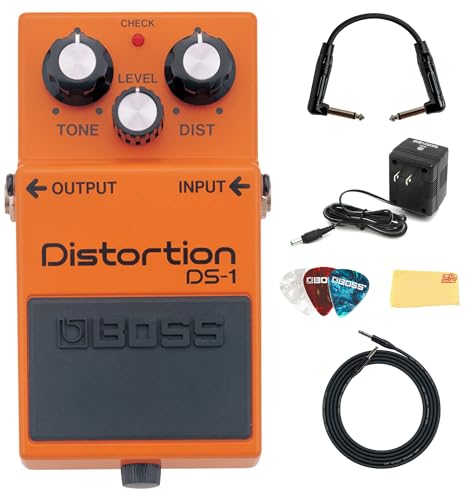 |
BOSS DS-1 Accessory Bundle | Includes power supply | Instrument and patch cables | Familiar DS-1 sound | View on Amazon | Read Review |
More Details on Our Top Picks
-
JHS PackRat Multi-Mode Distortion
The JHS PackRat is for players who want one distortion pedal to cover several generations of RAT-style gain. Its multiple circuit voices give you distinct textures, from tighter drive to saturated, abrasive distortion, while the familiar Distortion, Filter, and Volume controls keep the interface approachable.
That flexibility makes it useful for rock, punk, alternative, and heavier styles. The tradeoff is a larger footprint and more choices than you need if you only want one fixed distortion sound.
- Brand:JHS Pedals
- Type:Multi-mode distortion
- Modes:Nine circuit voices
- Controls:Distortion, Filter, Volume
- Bypass:True bypass
- Power:9V DC
- Additional Feature:Multiple RAT-style circuits
- Additional Feature:Heavy-duty enclosure
- Additional Feature:Compact pedalboard format
-
BOSS DS-1 Classic Distortion
If you want a proven starting point for rock and punk, the BOSS DS-1 remains an easy recommendation. Its hard-edged attack cuts through a band mix, and the wide tone control helps move from bright rhythm crunch to thicker lead sounds.
The three-knob layout is simple enough for quick adjustments, which suits newer players and dependable live rigs. At extreme settings, the distortion can become sharp or fizzy, so players seeking smooth, modern high gain may need another option.
- Brand:BOSS
- Type:Distortion pedal
- Controls:Distortion, Tone, Level
- Power:9V battery or adapter
- Additional Feature:Hard-edged attack
- Additional Feature:Smooth sustain
- Additional Feature:Compact pedal format
-
Donner Morpher Three-Mode Distortion
The Donner Morpher Mini suits guitarists who want metal-friendly gain without giving up useful tonal variety. Its Natural, Tight, and Classic Crunch modes let you shift between focused low-end response, fuller distortion, and an 80s-inspired crunch character.
Its mini enclosure saves valuable board space, and true bypass is helpful when the pedal is switched off. The compact design also means smaller controls, which can be less convenient during quick stage adjustments.
- Brand:Donner
- Type:Distortion pedal
- Modes:Natural, Tight, Classic Crunch
- Controls:Distortion, Tone, Level
- Bypass:True bypass
- Power:9V DC
- Additional Feature:80s metal character
- Additional Feature:Mini metal casing
- Additional Feature:Electric guitar focused
-
IOppWin Holy War Metal Distortion
For heavy riffing on a small board, the IOppWin Holy War focuses on aggressive metal distortion and selectable boost behavior. Its three-mode design gives you low- and high-boost choices, helping shape the pedal’s attack and overall response for different amplifiers.
The mini casing is practical for crowded pedalboards, while true bypass keeps the signal path straightforward when disengaged. Its specialist voicing is the main limitation, since cleaner rock tones may require careful gain and tone adjustments.
- Brand:IOppWin
- Type:Metal distortion
- Modes:Three boost modes
- Controls:Gain, Tone, Level
- Bypass:True bypass
- Power:9V DC
- Additional Feature:Low and high boost
- Additional Feature:Mini metal casing
- Additional Feature:Heavy riffing focus
-
JOYO Splinter Analog Distortion
The JOYO Splinter is a strong pick if you want distortion that can move from thick, fuzzy drive to sharper, more defined gain. Its FAT and MOSFET toggle changes the character of the circuit, giving you two useful directions before you fine-tune the sound with the Distortion, Filter, and Volume controls.
It works well for alternative rock, garage, classic rock, and heavier rhythm parts. The pedal’s broad character can be less immediate than a tightly focused distortion, and the Filter control may take some adjustment to understand.
- Brand:JOYO
- Type:Analog distortion
- Modes:FAT, MOSFET
- Controls:Distortion, Filter, Volume
- Bypass:True bypass
- Power:9V DC
- Additional Feature:Thick low-end character
- Additional Feature:Fuzz-like edge available
- Additional Feature:Compact metal enclosure
-
MOOER GE100 Multi-Effects 80 Presets
The MOOER GE100 is aimed at players who need many sounds in one unit, not just a single distortion flavor. With 80 presets and 66 effects, it can cover distortion, modulation, delay, reverb, and other core sounds for practice, rehearsal, and small performance setups.
The built-in 180-second looper, drum rhythms, tuner, expression control, and headphone output add real utility. Its broader feature set takes longer to organize than a compact stompbox, and the digital workflow may feel less direct for players who prefer one-knob-per-function control.
- Brand:MOOER
- Type:Multi-effects pedal
- Modes:80 presets
- Controls:Expression, tap tempo
- Power:9V DC
- Additional Feature:180-second looper
- Additional Feature:40 drum rhythms
- Additional Feature:Headphone output
-
Pro Co RAT2 Distortion Pedal
The Pro Co RAT2 is a natural fit for players who like distortion with grit, compression, and bite. It can produce edgy overdrive at lower settings, thick distortion in the middle, and more saturated, almost fuzz-like sounds as you raise the gain.
Its Filter control is especially useful for taming brightness after increasing distortion, while the simple three-control layout keeps setup quick. The pedal has a strong sonic personality, so it may not suit players seeking an especially transparent or polished drive.
- Brand:Pro Co
- Type:Distortion pedal
- Controls:Distortion, Filter, Volume
- Bypass:True bypass
- Power:9V battery or adapter
- Additional Feature:Iconic RAT-style circuit
- Additional Feature:Aggressive attack
- Additional Feature:Compressed sustain
-
JOYO JF-04 High-Gain Distortion
The JOYO JF-04 targets guitarists who want high-gain distortion with more shaping control than a basic three-knob pedal. Its full-range EQ helps you adjust the lows, mids, and highs for sounds that run from classic rock crunch to heavier metal rhythm tones.
That extra EQ control is useful when matching different amplifiers and guitars, and true bypass keeps the pedal unobtrusive when off. The wider control set can slow down dialing in a sound, while its high-gain focus is less suited to subtle blues drive.
- Brand:JOYO
- Type:High-gain distortion
- Controls:Gain, Volume, Bass, Middle, Treble
- Bypass:True bypass
- Power:9V DC
- Additional Feature:Broad EQ adjustment
- Additional Feature:Heavy rhythm tones
- Additional Feature:Compact metal housing
-
Donner Blues Drive Two-Mode Overdrive
The Donner Blues Drive is better suited to players who want amp-like breakup than extreme distortion. Its Warm and Hot modes give you a softer vintage response or a more driven sound for blues leads, classic rock, and pushed rhythm parts.
True bypass helps preserve your dry signal when the pedal is off, and the compact enclosure fits easily on a crowded board. This is an overdrive rather than a dedicated metal pedal, so the maximum gain remains limited for players chasing heavily saturated tones.
- Brand:Donner
- Type:Overdrive pedal
- Modes:Warm, Hot
- Controls:Gain, Tone, Level
- Bypass:True bypass
- Power:9V DC
- Additional Feature:Blues-focused voicing
- Additional Feature:Hotter lead setting
- Additional Feature:Electric guitar design
-
BOSS DS-1 Accessory Bundle
This bundle pairs the familiar BOSS DS-1 distortion with the basic accessories needed to connect it to a small rig. The included power supply, instrument cable, patch cable, picks, and polishing cloth make it convenient for a new player assembling a first pedal setup.
The DS-1 still delivers its familiar hard-edged rock voice and straightforward three-knob operation. The bundle is less appealing if you already own cables and power equipment, and the included accessories may not replace higher-end gear for a larger live board.
- Brand:BOSS
- Type:Distortion pedal bundle
- Controls:Distortion, Tone, Level
- Power:Gearlux power supply
- Additional Feature:Includes instrument cable
- Additional Feature:Includes patch cable
- Additional Feature:Includes picks
Frequently Asked Questions
Are cheap distortion pedals good for beginners?
Yes. An inexpensive pedal can give you a practical way to learn how gain, tone, and volume interact without committing to a large investment. Look for simple controls, dependable switching, and enough tone range for your amplifier. A budget pedal may not be as quiet or flexible as a premium model, but those limits are often manageable in a home setup. It can also remain useful as a dedicated sound for rhythm parts or rehearsals.
What is the difference between distortion and overdrive?
Overdrive usually produces a softer, more amp-like breakup that responds strongly to your picking and guitar volume. Distortion generally provides more sustain, compression, and saturation, making it a common choice for hard rock, punk, and metal. The categories overlap, so the label is only a starting point. Listen for the amount of compression, low-end tightness, and chord clarity you need rather than choosing by name alone.
Will a distortion pedal work with any guitar and amp?
Most distortion pedals work with standard electric guitars and conventional instrument cables, but the result depends on your pickups and amplifier. Humbuckers tend to produce a thicker, higher-output sound, while single coils may sound brighter and expose more background noise. A clean amp usually gives you the clearest picture of the pedal's character. If your amplifier is already heavily distorted, reduce the pedal's gain and use its level control carefully to avoid a muddy or overly compressed sound.
Should I use a battery or power adapter?
A battery is convenient for occasional playing, but a 9-volt adapter is usually better for regular use. It prevents unexpected failure and avoids the cost of replacing batteries. Check the pedal's exact voltage and polarity before powering it. Remove the battery if you will not use the pedal for an extended period, since an old battery can leak and damage the internal components.
Where should a distortion pedal go in my signal chain?
Place distortion near the front of the signal chain, typically after a tuner, wah, or compressor and before delay and reverb. This lets time-based effects repeat the distorted sound instead of distorting their echoes. If you use an overdrive, boost, or fuzz, move the pedals around and listen for changes in gain, brightness, and compression. The common order is a useful starting point, not a strict rule.