
Cheap audio interfaces are often treated as disposable stepping stones, but that assumption no longer holds. The right model can give you clean recording, dependable monitoring, and enough connectivity for serious home work.
This comparison of the Best Audio Interfaces under 100 weighs the details that shape daily use, from input flexibility to recording resolution. You will see where each type fits and which specifications deserve your attention before you buy.
Key Takeaways
- Prioritize mic preamp quality and a usable gain range if vocals, podcasts, or quiet sources are part of your setup.
- Choose two or more inputs if you record guitar and vocals together, since adding hardware later can cost more than expected.
- Check 24-bit resolution and the highest sample rate your DAW actually supports, rather than buying based on the larger number alone.
- Confirm USB-C compatibility, driver support, and device power requirements before connecting the interface to a computer, tablet, or phone.
- Look for direct monitoring, headphone volume control, and phantom power if you need low-latency tracking or condenser microphones.
| Studio Detail Leader |  |
MOTU M2 USB-C Interface | Detailed audio conversion | Clear front-panel metering | Two-input recording | View on Amazon | Read Review |
| Vocal Recording Favorite |  |
Focusrite Scarlett Solo, 192kHz | Simple soloist setup | Air mode adds presence | Dedicated instrument input | View on Amazon | Read Review |
| Dual Mic Value | 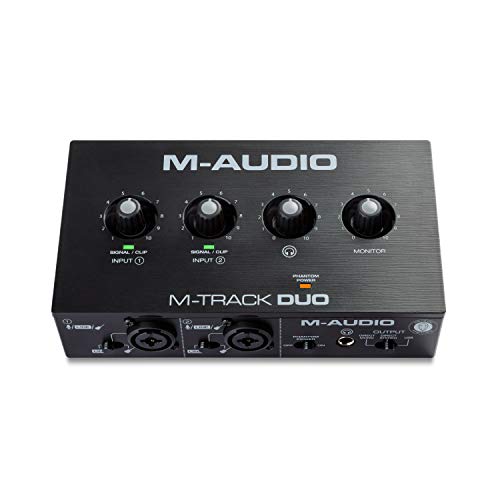 |
M-AUDIO M-Track Duo | Two combo inputs | Flexible line and DI use | Recording software included | View on Amazon | Read Review |
| Flexible Monitoring Pick |  |
USB-C Recording Interface, 24-bit | Three monitoring modes | Switchable line and Hi-Z | Compact two-channel design | View on Amazon | Read Review |
| Compact Starter Choice | 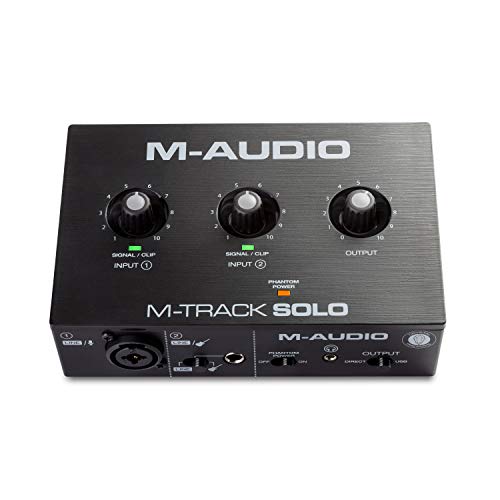 |
M-AUDIO M-Track Solo | Small desktop footprint | XLR and DI support | Software bundle included | View on Amazon | Read Review |
| Multitrack Workhorse |  |
Behringer UMC404HD, 4-Input | Four microphone preamps | MIDI connectivity | Four outputs | View on Amazon | Read Review |
| Mobile Guitar Companion |  |
Pocket Guitar Interface, Dual Connector | Highly portable design | Type-C and Lightning support | Guitar-focused operation | View on Amazon | Read Review |
| Budget Mic Gateway |  |
Behringer UMC22, 2-Input | Midas microphone preamp | Dedicated instrument input | Easy two-channel layout | View on Amazon | Read Review |
| Creator Routing Specialist |  |
MAONO PS22 Lite, 192kHz | Built-in loopback support | Low-noise preamp | Software routing controls | View on Amazon | Read Review |
| Simple Streaming Station |  |
XTUGA Q-12 USB Interface | Plug-and-play operation | XLR microphone support | 3.5mm microphone input | View on Amazon | Read Review |
More Details on Our Top Picks
-
MOTU M2 USB-C Interface
The MOTU M2 is the strongest pick for home recording, vocal production, and musicians who want a polished interface without unnecessary complexity. Its clear metering, low-latency monitoring, and high-resolution conversion make it easier to capture performances accurately.
You also get two inputs, MIDI connectivity, and a front-panel layout that keeps essential controls within reach. The main limitation is its compact I/O, which may feel restrictive if you plan to record a full band or several microphones at once.
- Brand:MOTU
- Interface Type:USB audio interface
- Input Count:2
- Bit Depth:24-bit
- Sample Rate:192 kHz
- Connection Type:USB-C
- Additional Feature:MIDI input and output
- Additional Feature:Direct hardware monitoring
- Additional Feature:Color LCD metering
-
Focusrite Scarlett Solo, 192kHz
Choose the Scarlett Solo if you mainly record vocals, guitar, or solo instruments. Its XLR microphone input, dedicated Hi-Z instrument input, and Air mode give a simple setup with useful tonal flexibility.
The interface is easy to pair with a computer or iPad, and its 56dB gain range supports many common microphones. You only get one microphone preamp, so it is not the right fit for two-mic recordings or stereo sources.
- Brand:Focusrite
- Interface Type:USB audio interface
- Input Count:2
- Bit Depth:24-bit
- Sample Rate:192 kHz
- Connection Type:USB-C
- Additional Feature:One XLR microphone input
- Additional Feature:One Hi-Z input
- Additional Feature:macOS, Windows, iPadOS support
-
M-AUDIO M-Track Duo
The M-Track Duo suits podcasters, singers, and small recording setups that need two microphone inputs at once. Its dual XLR, line, and DI connections let you switch between microphones, instruments, and external audio sources without changing interfaces.
A bundled software suite helps you start recording quickly, while direct monitoring keeps latency manageable. Its more modest feature set is practical, though experienced users may want finer routing and metering controls.
- Brand:M-AUDIO
- Interface Type:USB audio interface
- Input Count:2
- Connection Type:USB
- Additional Feature:Dual XLR inputs
- Additional Feature:Instrument DI connections
- Additional Feature:Direct monitoring control
-
USB-C Recording Interface, 24-bit
This generic USB-C interface is aimed at new creators who want one compact device for recording, streaming, and podcasting. Its XLR and 6.35mm connections, switchable line and Hi-Z modes, and three monitoring options cover a useful range of basic setups.
The three-color gain lights offer quick visual feedback, and 48V phantom power supports condenser microphones. The tradeoff is brand uncertainty and a less established software ecosystem than you get from better-known manufacturers.
- Interface Type:USB audio interface
- Input Count:2
- Bit Depth:24-bit
- Sample Rate:48 kHz
- Connection Type:USB-C
- Additional Feature:48V phantom power
- Additional Feature:Three-color gain indicators
- Additional Feature:XLR and 6.35mm jacks
-
M-AUDIO M-Track Solo
For solo musicians and streamers, the M-Track Solo keeps the recording chain refreshingly simple. It combines an XLR microphone input with line and DI connectivity, giving you a straightforward path for vocals, guitar, or another single source.
Its small footprint works well beside a laptop, and the included software helps first-time users get moving. The single microphone input limits you to one mic at a time, so interviews and stereo recording require a larger interface.
- Brand:M-AUDIO
- Interface Type:USB audio interface
- Input Count:2
- Sample Rate:48 kHz
- Connection Type:USB
- Additional Feature:XLR microphone input
- Additional Feature:Instrument and line input
- Additional Feature:Direct monitoring
-
Behringer UMC404HD, 4-Input
The UMC404HD is built for multitrack recording, rehearsal rooms, and creators who need more than two inputs. Four Midas microphone preamps, multiple line inputs, MIDI, and four outputs give you considerably more room to grow than most compact interfaces.
It supports 24-bit/192kHz recording and includes direct monitoring for latency-sensitive sessions. Its larger chassis takes more desk space, and the controls can feel dense if you only need one microphone.
- Brand:Behringer
- Interface Type:USB audio/MIDI interface
- Input Count:4
- Bit Depth:24-bit
- Sample Rate:192 kHz
- Connection Type:USB
- Additional Feature:Midas microphone preamps
- Additional Feature:Four analog outputs
- Additional Feature:Direct monitoring
-
Pocket Guitar Interface, Dual Connector
This pocket-sized interface targets guitarists on the move who want to record or stream from a phone, tablet, laptop, or PC. Its Type-C and Lightning compatibility gives you broader device coverage than a conventional desktop interface.
The plug-and-play approach is convenient for quick ideas and live sessions, with no large control panel to carry around. Its compact design usually means fewer controls and less connection flexibility than a full-size studio interface.
- Interface Type:Guitar audio interface
- Connection Type:Type-C and Lightning
- Additional Feature:Mobile device compatibility
- Additional Feature:Plug-and-play setup
- Additional Feature:Live streaming support
-
Behringer UMC22, 2-Input
The UMC22 is a sensible entry point for vocalists, guitarists, and home-recording beginners. Its Midas microphone preamp and instrument input cover the two sources most new users typically need.
Direct monitoring helps you hear yourself without relying entirely on software playback, while the 2×2 layout stays easy to understand. Its 48kHz ceiling is adequate for standard recording but offers less headroom than higher-resolution alternatives.
- Brand:Behringer
- Interface Type:USB audio interface
- Input Count:2
- Sample Rate:48 kHz
- Connection Type:USB
- Additional Feature:Direct monitoring
- Additional Feature:XLR microphone connection
- Additional Feature:Instrument input
-
MAONO PS22 Lite, 192kHz
The PS22 Lite is designed for streamers, podcasters, and home-studio users who need more than basic input and output controls. Loopback, routing software, and an ASIO driver make it useful for combining microphones, instruments, computer audio, and streaming applications.
Its low-noise preamp and 24-bit/192kHz support suit detailed vocal and instrument work. The added routing features can take time to learn, especially if you only want a simple microphone-to-recording setup.
- Brand:MAONO
- Interface Type:USB audio interface
- Bit Depth:24-bit
- Sample Rate:192 kHz
- Connection Type:USB
- Additional Feature:ASIO driver support
- Additional Feature:Routing software
- Additional Feature:Streaming-focused loopback
-
XTUGA Q-12 USB Interface
The XTUGA Q-12 fits basic computer recording and streaming where simple plug-and-play operation matters most. Its XLR microphone connection and 3.5mm microphone input give you two familiar ways to bring audio into a computer.
Ultra-low-latency operation can help with live monitoring and broadcasts, while the compact format keeps setup uncomplicated. The limited published detail and less familiar software support make it harder to recommend for demanding studio workflows.
- Brand:XTUGA
- Interface Type:USB audio interface
- Connection Type:USB
- Additional Feature:Ultra-low-latency operation
- Additional Feature:Computer recording support
- Additional Feature:Streaming-oriented design
Frequently Asked Questions
Is an audio interface under $100 good enough for home recording?
Yes. A good budget interface can deliver 24-bit audio, clean microphone gain, and low-latency monitoring for vocals, instruments, podcasts, and streaming. Your microphone, room acoustics, and recording technique often affect the final sound more than a modest price difference between interfaces. Look for the features you will actually use, such as phantom power, a Hi-Z input, and independent headphone volume. Paying for extra connections you never need rarely improves a simple setup.
Do I need an audio interface for a USB microphone?
Usually not. A USB microphone already contains its own analog-to-digital converter and connects directly to your computer, while an interface is designed mainly for XLR microphones and instruments. An interface becomes useful if you want to use XLR microphones, connect studio monitors, record multiple sources, or monitor several inputs. Avoid connecting a USB mic to an interface unless the manufacturer specifically supports that arrangement.
Can these interfaces power condenser microphones?
Most suitable models include 48V phantom power, which is required by many condenser microphones. Check that the interface has a dedicated phantom-power switch and enough clean gain for your specific microphone. Use care with unusual microphones and older equipment. Phantom power is generally intended for balanced XLR connections, so follow the microphone and interface instructions before connecting adapters or specialty gear.
Will an audio interface under $100 work with an iPad?
Some will, but mobile compatibility depends on the interface, tablet, operating system, and power available through the connection. You may need a USB adapter or a powered hub, especially with interfaces that draw more power. Look for explicit iOS or iPadOS support in the product documentation. Also confirm that your recording app recognizes the interface before building a mobile setup around it.
What is the difference between one-input and two-input interfaces?
A one-input model suits solo vocals, guitar, voice-over, and simple streaming. A two-input model lets you record two sources at once, such as a singer and guitar, or two microphones for an interview. Choose two inputs if you expect your setup to grow. The extra channel costs little compared with replacing an interface later, but a one-input model can be the smarter buy for a strictly solo workflow.