
Many players mistakenly assume that a higher price tag automatically equals a heavier, more aggressive sound. High-gain tone relies on your ability to sculpt frequencies rather than just cranking up the gain knob until the signal clips.
Choosing the Best Distortion Pedals for Metal requires understanding how your specific guitar pickups interact with these circuits. Here is a breakdown of the current market to help you find the right tool for your pedalboard.
Key Takeaways
- Prioritize pedals with an active mid-range control to prevent your tone from disappearing in a dense mix.
- Check the circuit type because analog designs often provide a more organic feel than their digital counterparts.
- Verify if the enclosure size fits your existing board space, as many high-gain pedals now come in compact mini formats.
- Confirm the power requirements, specifically whether the unit demands standard 9V or higher voltage for more headroom.
- Evaluate the bypass style, as true bypass preserves your clean signal path when the effect is disengaged.
| Budget Shredder Staple |  |
Rowin Analog Heavy Metal Distortion | Extremely compact size | Authentic metal saturation | True bypass switching | View on Amazon | Read Review |
| Industry Standard Titan |  |
Boss MT-2 Metal Zone | Powerful active EQ | Dual-stage gain circuitry | Legendary durability | View on Amazon | Read Review |
| High Gain Specialist | 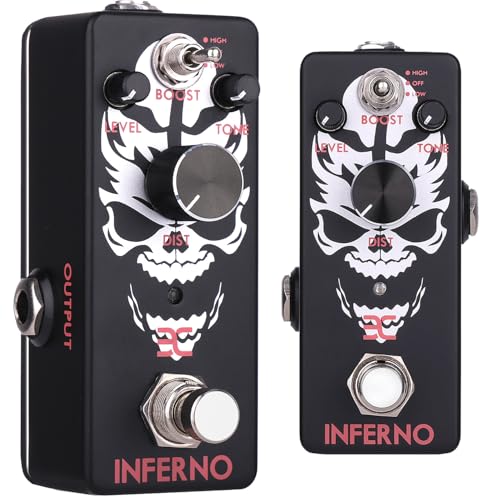 |
EX Inferno Death Metal Distortion | Three distinct boost modes | Aggressive distortion profile | Space-saving design | View on Amazon | Read Review |
| Swedish Chainsaw Reissue | 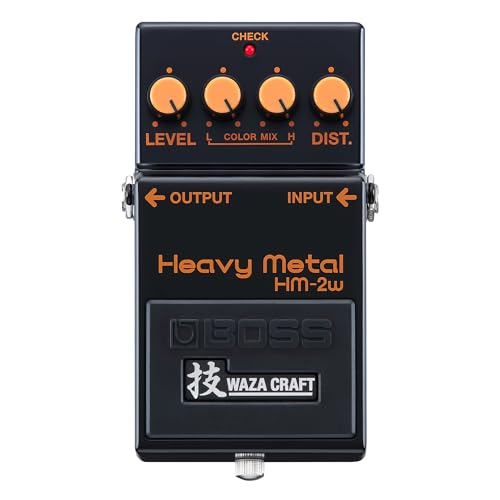 |
Boss HM-2W Waza Craft | Authentic chainsaw distortion | Added custom mode | Premium build quality | View on Amazon | Read Review |
| Essential Starter Kit | 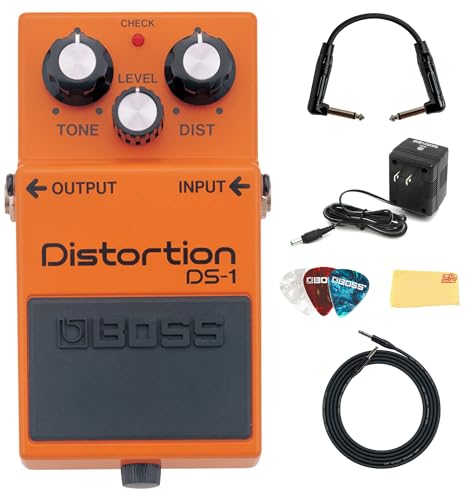 |
Boss DS-1 Distortion Bundle | Reliable, classic tone | Complete accessory bundle | Proven design longevity | View on Amazon | Read Review |
| Affordable Sonic Wall | 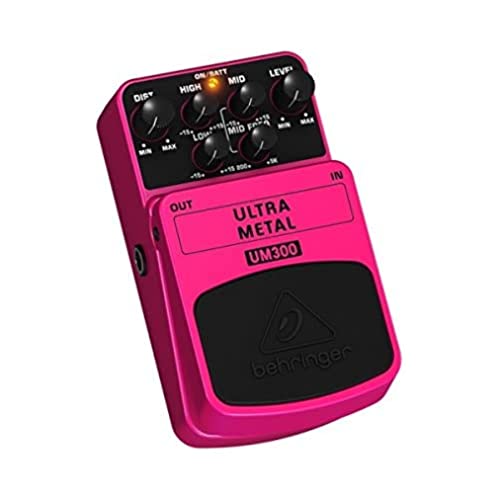 |
Behringer Ultra Metal UM300 | Massive gain range | Deep EQ control | Budget-friendly price | View on Amazon | Read Review |
| Versatile Tone Shaper |  |
Joyo High Gain Distortion | Versatile analog circuitry | Wide EQ range | Solid construction | View on Amazon | Read Review |
| Compact 80s Revivalist |  |
Donner Morpher Mini Distortion | Three distinct tone modes | Very quiet performance | Tiny footprint | View on Amazon | Read Review |
| Aggressive Mini Driver | 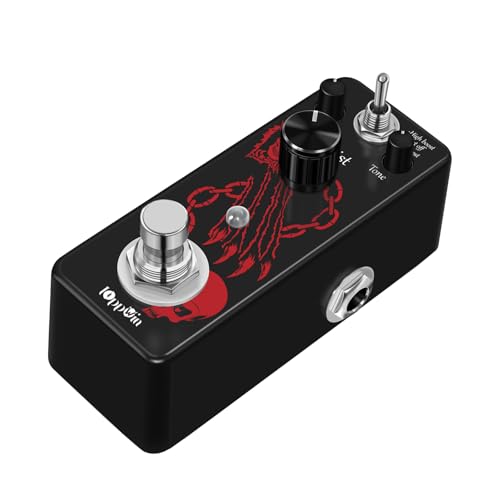 |
IOppWin Holy War Distortion | Dual boost modes | Compact metal design | Sharp attack | View on Amazon | Read Review |
| Modern Practice Hybrid |  |
Muff Top Boost Distortion | Built-in headphone output | Vintage tone modes | Versatile practice utility | View on Amazon | Read Review |
More Details on Our Top Picks
-
Rowin Analog Heavy Metal Distortion
If you want to chase crushing metal tones without clearing out your savings account, this compact unit is your entry point. It captures that classic high-gain saturation effectively, making it a reliable choice for players who need a dedicated distortion tool on a crowded board.
You might find the smaller knobs difficult to adjust during a live set. Despite the miniature footprint, the pedal maintains a true bypass signal path, ensuring your clean tone stays pristine when the effect is off.
- Brand:Rowin
- Pedal Type:Analog Distortion
- Bypass Type:True Bypass
- Additional Feature:Sturdy metal casing
- Additional Feature:LED status indicator
- Additional Feature:Minimal board space
-
Boss MT-2 Metal Zone
Few pedals hold the same cultural weight as the MT-2. Its dual-stage gain circuit provides an incredibly wide range of tones, from scooped-mid thrash to thick, modern distortion.
The active three-band EQ is the secret weapon here. It functions like a scalpel, allowing you to carve out specific frequencies to fit your mix perfectly. Just be prepared to spend some time experimenting, as the controls are highly sensitive.
- Brand:Boss
- Pedal Type:Distortion
- Enclosure Size:Compact
- Bypass Type:Buffered
- Additional Feature:Mid-range frequency control
- Additional Feature:Sturdy metal construction
- Additional Feature:Iconic aesthetic
-
EX Inferno Death Metal Distortion
This pedal is designed for the player who prefers their signal saturated and aggressive. The inclusion of a three-mode boost switch lets you tailor the intensity of your distortion, shifting between tight rhythm crunch and soaring leads.
It is a straightforward tool that avoids unnecessary complexity. While the mini-pedal design keeps your setup lean, the controls feel a bit cramped if you have larger hands.
- Brand:EX
- Pedal Type:Distortion
- Enclosure Size:Mini
- Control Modes:3-Mode Boost
- Bypass Type:True Bypass
- Additional Feature:High-gain architecture
- Additional Feature:Metal housing
- Additional Feature:Simple interface
-
Boss HM-2W Waza Craft
The Waza Craft line brings a legendary circuit into the modern era. You get the iconic chainsaw tone of 80s Swedish death metal, complete with the famous dual-knob color mix. The addition of a custom mode offers a bit more punch and definition for contemporary playing.
It is a premium reissue that respects the original while adding improved noise floor management. This pedal is not for the faint of heart, as it specializes in a very specific, wall-of-sound aesthetic.
- Brand:Boss
- Pedal Type:Distortion
- Enclosure Size:Compact
- Control Modes:Standard and Custom
- Bypass Type:Buffered
- Additional Feature:Dual gain controls
- Additional Feature:Vintage accurate circuitry
- Additional Feature:Five-year warranty
-
Boss DS-1 Distortion Bundle
The DS-1 is a cornerstone of the pedal world for good reason. It offers a hard-edged clipping sound that works beautifully for classic metal and punk styles. This bundle is helpful if you are just starting out, as it includes the power supply and essential cabling.
The tone is famously bright and biting. You might find it needs a slight boost in front to really get that heavy, modern metal sustain, but it remains a foundation of rock history.
- Brand:Boss
- Pedal Type:Distortion
- Enclosure Size:Compact
- Bypass Type:Buffered
- Included Accessories:Power supply, cables, picks
- Additional Feature:Tone control shaping
- Additional Feature:Rugged metal chassis
- Additional Feature:Simple three-knob layout
-
Behringer Ultra Metal UM300
If you want to achieve a scooped-mid metal sound on a strict budget, this is a strong contender. It mimics the behavior of high-end boutique pedals by providing a massive gain ceiling. The active EQ gives you enough control to dial in a scooped sound that slices through a mix.
The plastic casing feels less durable than metal alternatives, so handle it with care at gigs. It is a fantastic value for home practice or bedroom recording setups where raw power matters more than tank-like construction.
- Brand:Behringer
- Pedal Type:Distortion
- Enclosure Size:Standard
- Additional Feature:LED status indicator
- Additional Feature:Electronic footswitch
- Additional Feature:Dual-band EQ
-
Joyo High Gain Distortion
This pedal functions like a chameleon, moving from classic rock crunch to full-throttle metal grit. The analog circuit design gives your signal a warm, responsive character that digital pedals sometimes lack.
The full-range EQ is the standout feature, offering more nuanced control than most competitors in this category. It is a workhorse pedal that handles varied gain stages without losing clarity, though it can get a bit noisy at extreme settings.
- Brand:Joyo
- Pedal Type:Analog Distortion
- Bypass Type:True Bypass
- Additional Feature:High-gain output
- Additional Feature:Classic metal tones
- Additional Feature:Sturdy metal housing
-
Donner Morpher Mini Distortion
This pedal packs three distinct voicings into a tiny frame. The natural, tight, and classic modes cover everything from subtle breakup to 80s-inspired metal saturation. It is remarkably quiet for a mini pedal, making it a smart choice for your board.
The small knobs can be a bit fiddly during quick adjustments on stage. However, the versatility of the three modes makes up for the lack of space, letting you swap between genres with a flick of a switch.
- Brand:Donner
- Pedal Type:Distortion
- Enclosure Size:Mini
- Control Modes:3-Mode
- Bypass Type:True Bypass
- Additional Feature:All-metal casing
- Additional Feature:Versatile gain shaping
- Additional Feature:LED indicator
-
IOppWin Holy War Distortion
The Holy War pedal is built for those who want a thick, compressed sound without the bulk. Its dual boost settings allow you to toggle between low and high gain, which is useful for switching from rhythm to lead playing on the fly.
The metal construction feels surprisingly premium given its size. It provides a sharp, biting distortion that cuts through dense arrangements, though it can become a bit muddy if you push the bass EQ too far.
- Brand:IOppWin
- Pedal Type:Distortion
- Enclosure Size:Mini
- Control Modes:Low/High Boost
- Bypass Type:True Bypass
- Additional Feature:Intuitive toggle switch
- Additional Feature:Durable casing
- Additional Feature:High-gain capability
-
Muff Top Boost Distortion
This unit is a unique hybrid that prioritizes flexibility. It manages to capture authentic 80s and 90s metal textures while offering a useful earphone output for silent practice sessions. It is like having a private practice rig tucked inside a standard pedal housing.
The sound is tailored more toward classic metal genres than modern djent or extreme technical styles. If you need a device that serves both your rehearsal space and your live pedalboard, this is a clever multipurpose tool.
- Brand:Generic
- Pedal Type:Distortion
- Bypass Type:True Bypass
- Additional Feature:80s/90s sound presets
- Additional Feature:Silent practice output
- Additional Feature:Sturdy construction
Frequently Asked Questions
Should I put my distortion pedal before or after my reverb?
Always place your distortion pedal before your reverb in the signal chain. If you reverse this, the reverb will become smeared and chaotic as the distortion tries to process the trail of the effect. Treat your distortion as the foundation of your tone. Everything else, like modulation or time-based effects, should sit on top of that base layer.
Do I need a boost pedal if I already have a distortion pedal?
Many metal guitarists use an overdrive pedal as a clean boost in front of their distortion or high-gain amp. This tightens up the low end and adds clarity to fast picking passages. It serves as a refined filter that removes the flubby, loose frequencies. This makes your rhythm playing sound like a precise, mechanical machine.
Will a distortion pedal ruin the sound of my tube amplifier?
If you run a high-gain pedal into a clean channel, it mimics the sound of a distorted amp. However, pushing a pedal into an already overdriven tube amp can create a rich harmonic texture. Just watch your output levels to avoid unwanted feedback. Start with the pedal volume low and balance it against your amp settings.
What is the difference between distortion and fuzz?
Fuzz is a thick, square-wave clipping effect that creates a massive, wall-like sound. Distortion is more focused and articulate, preserving the individual note definition needed for complex metal riffs. Fuzz tends to be woolly and unpredictable. Distortion offers the surgical precision required for technical metal styles.
Can I run my distortion pedal on a battery?
You can, but metal pedals with high-draw circuits will drain a nine-volt battery in a matter of hours. Always use a regulated power supply to ensure consistent voltage and silent operation. Relying on batteries during a set is a recipe for disaster. A dedicated power brick provides the reliable current you need to keep your tone from sagging.