
A common mistake is assuming higher transmit power automatically makes a radio better for kayaking. Real-world usefulness depends on several connected details, and the wrong match can leave you carrying extra weight without gaining meaningful value.
This comparison of the Best Vhf Radios for Kayaking brings the category into clearer focus. The models below cover different priorities, so keep reading to see which specifications deserve your attention.
Key Takeaways
- Prioritize a floating design and a high waterproof rating, since recovery is far easier when your radio stays on the surface.
- Choose 5 or 6 watts for stronger transmission potential, but remember that terrain, antenna position, and battery charge also affect range.
- Check USA, Canadian, and international channels if you paddle across borders or travel with your radio.
- Look for a NOAA weather alert function so you can receive warnings without constantly monitoring a weather broadcast.
- Compare battery capacity, charging method, and weight, because a radio that is easy to carry and recharge is more likely to stay ready.
| Best Overall |  |
Cobra BlueBound 350 6W Radio | 6-watt transmit power | Floats when dropped | USB-C charging | View on Amazon | Read Review |
| Trusted Floating Workhorse | 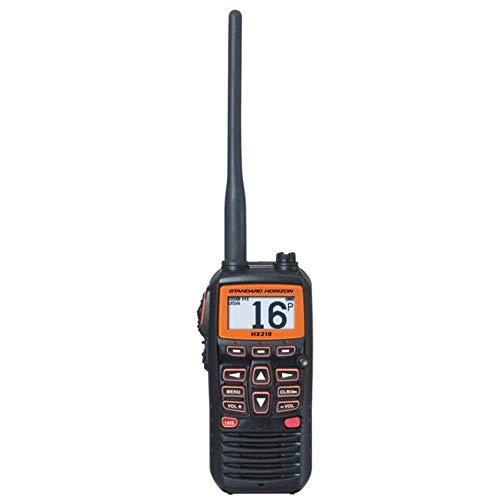 |
Standard Horizon HX210 6W Radio | 6-watt transmit power | Floating handheld design | Marine VHF operation | View on Amazon | Read Review |
| High-Capacity Voyager | 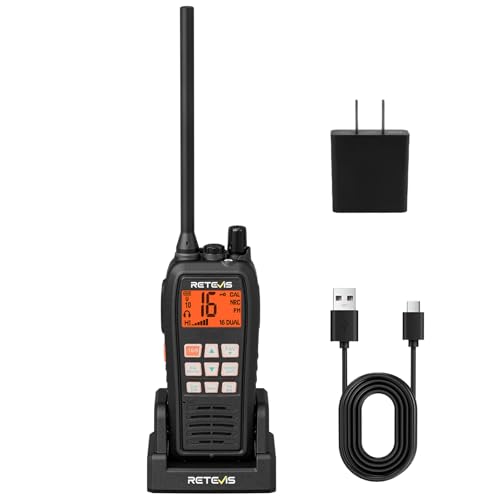 |
Retevis RM15 6W Radio | 2,000mAh battery | IP68 waterproof rating | USB-C radio charging | View on Amazon | Read Review |
| High-Visibility Choice |  |
Cobra BlueBound 350 White 6W | High-visibility white finish | 6-watt transmit power | USB-C charging | View on Amazon | Read Review |
| Lightweight Touring Pick |  |
Icom M25EVO Floating Radio | Lightweight handheld design | Floating construction | USB charging | View on Amazon | Read Review |
| Endurance Focused |  |
Uniden Atlantis 155 10-Hour Radio | 10-hour battery life | IPX8 submersible protection | Dual-color display | View on Amazon | Read Review |
| Long-Lasting Lightweight |  |
Retevis RM01P 3.5W Radio | 15-hour battery life | USB-C charging | Floating design | View on Amazon | Read Review |
| Large-Screen Communicator |  |
Uniden Atlantis 275 6W Radio | Large dual-color screen | 6-watt transmit power | IPX8 submersible protection | View on Amazon | Read Review |
| Adjustable Power Specialist |  |
Uniden MHS75 Selectable 5W Radio | Three power levels | Submersible waterproof design | Broad channel coverage | View on Amazon | Read Review |
| Compact Power Saver | 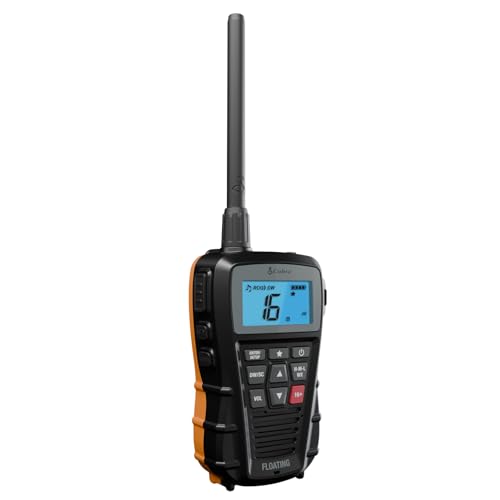 |
Cobra BlueBound 150 3W Radio | 3-watt transmit power | Floating waterproof design | USB-C charging | View on Amazon | Read Review |
More Details on Our Top Picks
-
Cobra BlueBound 350 6W Radio
For kayak trips where water exposure is routine, the Cobra BlueBound 350 gives you a strong mix of 6-watt output, floating design, and IPX7 waterproofing. NOAA alerts, international channels, and a USB-C port make it practical for both local paddles and longer coastal outings.
Its main limitation is that the supplied listing does not specify battery runtime. You also get a black finish only in this version, so it is less visible than the white alternative in bright conditions.
- Brand:Cobra
- Radio Type:Handheld marine VHF
- Transmit Power:6 watts
- Waterproof Rating:IPX7
- Charging Method:USB-C
- Additional Feature:NOAA weather alerts
- Additional Feature:International channel functionality
- Additional Feature:LCD screen and belt clip
-
Standard Horizon HX210 6W Radio
The Standard Horizon HX210 is a sensible pick if you want a straightforward handheld with 6-watt transmission and a floating design. It suits kayakers who value a familiar marine-radio format for communication on lakes, rivers, and coastal trips.
The available listing does not identify a waterproof rating, charging method, or battery duration. That missing detail makes it harder to compare directly with newer radios that publish USB-C and submersion specifications.
- Brand:Standard Horizon
- Radio Type:Handheld marine VHF
- Transmit Power:6 watts
- Additional Feature:Floating construction
- Additional Feature:HX210 model platform
- Additional Feature:Marine communication channels
-
Retevis RM15 6W Radio
Choose the Retevis RM15 if you want a kayak radio with a 2,000mAh battery, IP68 protection, and charging support on both the radio and its charger. Its 6-watt output, NOAA access, noise reduction, and global channels fit paddlers who travel between different waterways.
The listing does not provide a precise battery-life figure, so capacity is the clearer buying signal here. The RM15 may also be more equipment than casual lake paddlers need.
- Brand:Retevis
- Radio Type:Handheld marine VHF
- Transmit Power:6 watts
- Waterproof Rating:IP68
- Charging Method:USB-C
- Additional Feature:NOAA weather alerts
- Additional Feature:Noise reduction
- Additional Feature:Tri-watch monitoring
-
Cobra BlueBound 350 White 6W
The white BlueBound 350 gives you the same core setup as the black model, including 6-watt power, floating construction, IPX7 protection, and NOAA weather alerts. Its lighter finish is easier to spot against dark gear, which helps when you are organizing a crowded kayak or deck.
As with the black version, the supplied information does not state battery runtime. The white housing can also show scuffs more readily than a darker finish after frequent transport.
- Brand:Cobra
- Radio Type:Handheld marine VHF
- Transmit Power:6 watts
- Waterproof Rating:IPX7
- Charging Method:USB-C
- Additional Feature:NOAA weather alerts
- Additional Feature:International channel functionality
- Additional Feature:Floating design
-
Icom M25EVO Floating Radio
The Icom M25EVO is aimed at paddlers who want a lightweight floating radio without giving up waterproof protection. USB charging and the advertised long battery life make it well suited to day trips where you want less bulk on your PFD or deck.
The listing does not provide a transmit-power figure or exact battery duration, so you cannot judge its range and endurance as precisely as some alternatives. That makes this model better for buyers prioritizing portability over published specifications.
- Brand:Icom
- Radio Type:Handheld marine VHF
- Charging Method:USB
- Additional Feature:Waterproof construction
- Additional Feature:Long battery life
- Additional Feature:Blue finish
-
Uniden Atlantis 155 10-Hour Radio
For full-day outings, the Uniden Atlantis 155 offers a stated 10-hour battery life, floating IPX8 protection, and a dual-color screen. Its USA, international, and Canadian channel coverage also suits kayakers who cross borders or paddle in varied marine regions.
The radio is limited to the power level specified in the listing, which does not state a wattage. Its 10-hour runtime is useful, but longer expeditions may still require a charging plan.
- Brand:Uniden
- Radio Type:Handheld marine VHF
- Waterproof Rating:IPX8
- Battery Life:10 hours
- Additional Feature:NOAA weather alerts
- Additional Feature:USA, international, Canadian channels
- Additional Feature:Floating design
-
Retevis RM01P 3.5W Radio
The Retevis RM01P is a good match for recreational paddling, especially if you value a 15-hour battery and a compact 3.5-watt format. IP67 protection, USB-C charging, NOAA alerts, and vibration drainage cover the practical concerns that come with wet gear and long days outside.
Its lower 3.5-watt output is the clearest tradeoff against 6-watt radios. That makes it more appropriate for lakes, rivers, and moderate-range communication than demanding offshore use.
- Brand:Retevis
- Radio Type:Handheld marine VHF
- Transmit Power:3.5 watts
- Waterproof Rating:IP67
- Battery Life:15 hours
- Charging Method:USB-C
- Additional Feature:NOAA weather alerts
- Additional Feature:Global channel support
- Additional Feature:Three-watch monitoring
-
Uniden Atlantis 275 6W Radio
The Uniden Atlantis 275 puts a large dual-color screen and 6-watt transmission at the center of its design. Its floating IPX8 body and broad USA, international, and Canadian channel coverage make it a strong fit for coastal kayakers who want clear controls in changing conditions.
The supplied listing does not state battery life or charging method. A larger display can improve readability, but it may also take more room than a minimalist radio on a compact kayak.
- Brand:Uniden
- Radio Type:Handheld marine VHF
- Transmit Power:6 watts
- Waterproof Rating:IPX8
- Additional Feature:NOAA weather alerts
- Additional Feature:Floating construction
- Additional Feature:International channel coverage
-
Uniden MHS75 Selectable 5W Radio
The Uniden MHS75 gives you selectable 1, 2.5, or 5-watt power, so you can use less output for nearby communication and reserve higher power for longer-range needs. Its submersible waterproof design and USA, international, and Canadian channels make it a capable choice for serious marine use.
Unlike the floating models in this roundup, the listing does not state that the MHS75 floats. It also does not identify battery life or charging method, so you will need to account for those details before extended kayak trips.
- Brand:Uniden
- Radio Type:Handheld marine VHF
- Transmit Power:1, 2.5, 5 watts
- Additional Feature:USA marine channels
- Additional Feature:International marine channels
- Additional Feature:Canadian marine channels
-
Cobra BlueBound 150 3W Radio
The Cobra BlueBound 150 is the practical choice for casual kayakers who want a floating, waterproof radio without moving up to 6-watt output. Its 3-watt transmission, NOAA alerts, international functionality, and USB-C charging cover the essentials for many inland and nearshore trips.
The lower transmit power can limit communication distance compared with 6-watt models. The listing also omits battery runtime, so this radio is best for shorter outings unless you carry a backup charging option.
- Brand:Cobra
- Radio Type:Handheld marine VHF
- Transmit Power:3 watts
- Waterproof Rating:IPX7
- Charging Method:USB-C
- Additional Feature:NOAA weather alerts
- Additional Feature:International channel functionality
- Additional Feature:LCD screen and belt clip
Frequently Asked Questions
Do I need a VHF radio for kayaking?
You may not need one on a small, sheltered lake close to help, but a VHF radio is highly valuable on coastal trips, large lakes, rivers with commercial traffic, and remote routes. It gives you direct access to marine channels and emergency services where mobile coverage may be weak or absent. Carry one if your route involves changing weather, cold water, strong currents, or limited shore access. A phone is useful backup equipment, but it should not be your only communication device.
What is the best range for a kayak VHF radio?
A handheld unit with 5 watts of transmit power is the usual choice for kayaking. Under clear line-of-sight conditions, communication may reach several miles, but low cliffs, islands, heavy weather, and the low height of a kayak can shorten that distance. Treat published range figures as best-case estimates. Staying near other paddlers, boats, or shore stations provides a more realistic safety margin than relying on a maximum number.
Should a kayak VHF radio float?
Yes, a floating radio is strongly recommended. Floating models are easier to recover after a capsize or accidental drop, and many include a flashing light that helps you locate them in the water. Floating does not always mean fully waterproof, so check both features separately. Look for at least an IPX7 rating and follow the manufacturer's guidance on battery covers and charging ports.
Is GPS or DSC worth paying extra for?
GPS and DSC distress calling are worthwhile if you paddle offshore, travel alone, or spend time beyond reliable phone coverage. With the radio configured correctly, DSC can send your identity and position to compatible vessels or rescue services. These features add cost and require setup. Register your MMSI number, enter emergency contacts where supported, and learn the distress procedure before your trip.
Can I use any VHF channel while kayaking?
No. Marine channels have specific purposes, and some are reserved for distress, calling, safety, or commercial traffic. Channel 16 is widely used for distress and calling, but you should follow the regulations and channel plan for your country. Listen before transmitting, keep routine calls brief, and switch to an appropriate working channel when instructed. A short radio safety course can teach channel etiquette and emergency procedures.